




DAKAR, Senegal: The Community Court of Justice of the Economic Community of West African States, ECOWAS, is calling for stronger mechanisms to enforce its judgments and improve its contribution to human rights protection, good governance, innovation and regional integration.
President of the ECOWAS Court of Justice, Justice Ricardo Gonçalves, made the call at the 2026 Annual International Conference of the Community Court of Justice, held in Dakar, Senegal.
The conference comes as the Court marks 25 years since its establishment as ECOWAS’ principal judicial organ responsible for interpreting and applying Community law across the subregion.
Justice Gonçalves said the Court is undergoing institutional transformation aimed at making it more effective, accessible and responsive to the needs of the people of West Africa.
He urged participants to engage in frank deliberations and take decisions that would strengthen the Court’s ability to contribute to the broader strategic objectives of ECOWAS, particularly those contained in the ECOWAS Vision 2050.

One of the major reforms under consideration is the establishment of an Appeal Division, which is expected to strengthen the Court’s judicial architecture and improve access to justice.
Another significant development is the adoption of the Court’s Arbitration Rules, which provide additional opportunities for the peaceful and efficient settlement of disputes and could strengthen regional dispute resolution mechanisms.
However, the enforcement of the Court’s judgments remains a major concern.
ECOWAS Commission President, Birame Diop, represented at the conference by the Commission’s Director of Legal Affairs, said the gap between the authority of the Court’s decisions and their implementation remains one of the most serious challenges to the institution’s credibility.
He said the ECOWAS Commission would continue engaging Member States to encourage national authorities to comply with and implement the Court’s judgments.
President of Senegal’s Supreme Court, Justice Mouhamadou Mbaye, also underscored the importance of strong regional institutions in protecting citizens and shared values.
He noted that when institutions such as the ECOWAS Court are weakened, the protection of rights becomes even more important as a means of safeguarding the values and objectives of the Community.
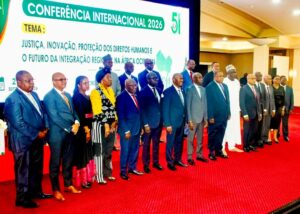
The 2026 conference provides an opportunity for judges, legal practitioners, government representatives, academics and other stakeholders to examine the future of regional justice and identify practical ways of strengthening the Court’s effectiveness.
As ECOWAS continues to pursue deeper regional integration, the ability of its judicial institutions to deliver and enforce justice remains central to building public confidence in the Community and protecting the rights of citizens across West Africa.