

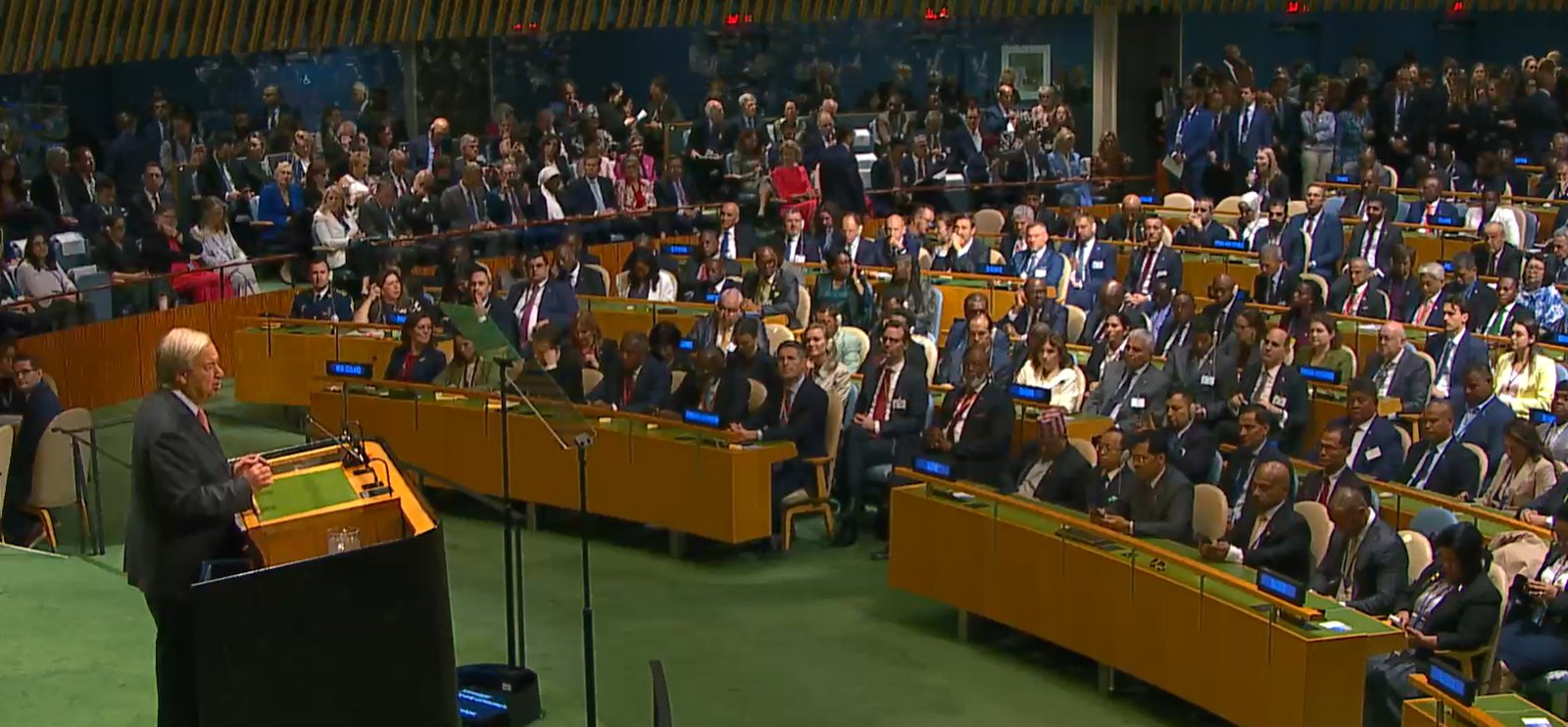
“The fault lines in our world are widening. Cracks have become canyons,” said UN Secretary-General António Guterres as he opened the general debate of the General Assembly’s eighty-first session.
Framing today’s conflicts, inequalities, climate shocks and technological disruption as “the story of power”, he argued that these are not separate crises but interconnected challenges.
The Secretary-General identified three major power shifts: the emergence of new centres of economic, political and technological influence among States, the transfer of power from Governments to powerful corporations and individuals and from humans to machines, such as artificial intelligence.
He warned that global institutions still reflect “the power realities and interests of a largely bygone age.”
Calling for “networked multipolarity”, he urged a world built on interdependence, international law and shared rules rather than fragmentation into rival blocs.
“Building such a future begins with a recognition, especially by superPowers that their power isn’t so super,” he said, stressing that military, economic and technological power alone cannot solve today’s challenges.