


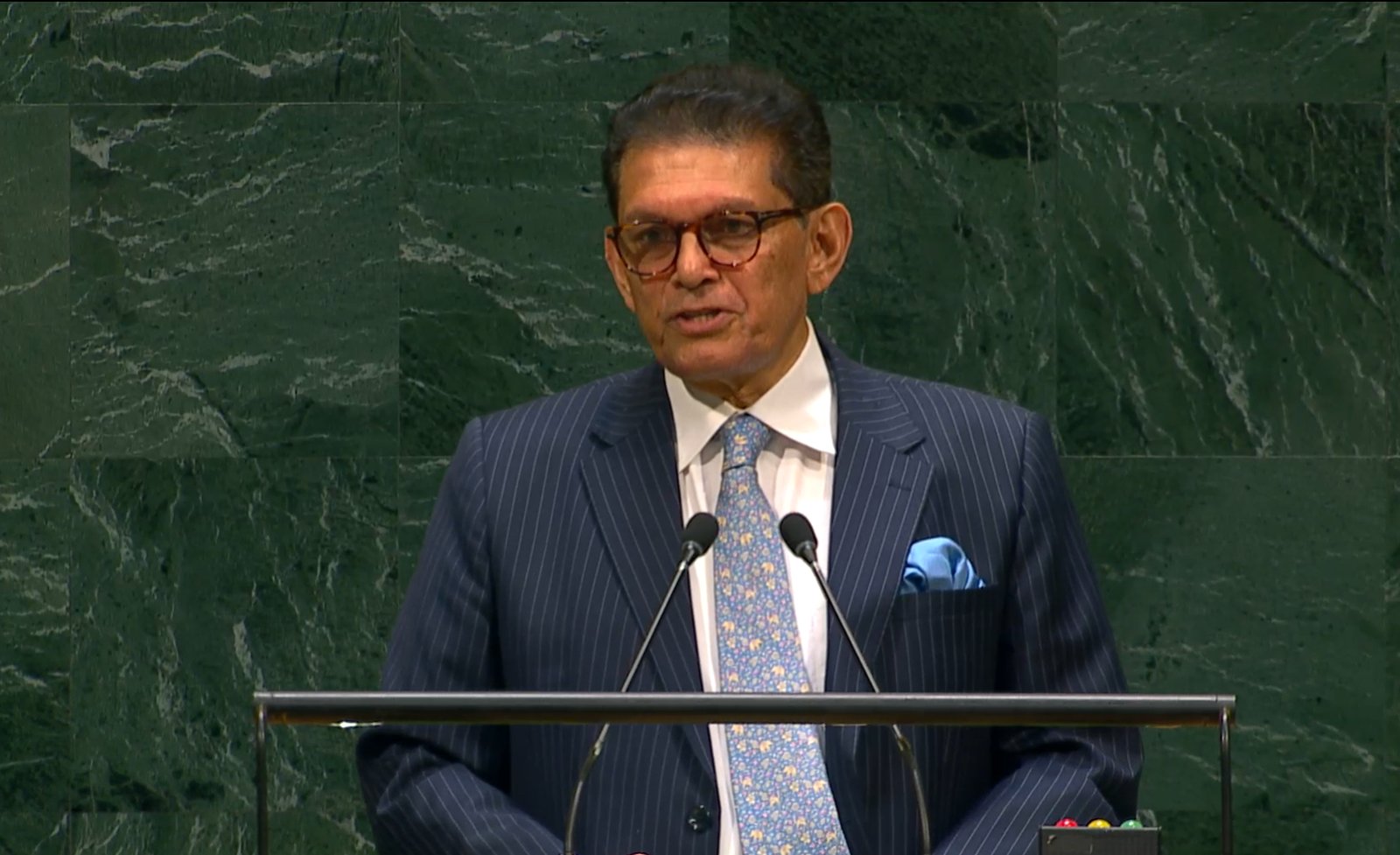
Khalilur Rahman (Bangladesh), President of the eighty-first session of the General Assembly, recalled that the UN emerged from humanity’s darkest hour as a forum where nations could choose diplomacy over devastation. Eight decades later, it unites 193 Member States under one roof and has helped prevent the unimaginable: a third world war.
“The United Nations has persevered. Not because it is perfect, but because it is irreplaceable,” he said. But, endurance is not enough. “Outside these walls, people are not asking whether the United Nations still exists. They are asking whether it works.”
The United Nations continues to stay and serve, from supporting Rohingya refugees in Cox’s Bazar to helping communities recover in Iraq and delivering assistance in Haiti. Yet conflicts in Gaza, Sudan, Ukraine, Myanmar and elsewhere reveal serious shortcomings. International law, civilian protection and humanitarian access cannot be applied selectively.
He declared: “Trust is not given. It is earned.” Rebuilding it requires realism, reform and inclusion. The Security Council must “step up” and act when peace is threatened. It must also become more representative, transparent and reflective of today’s geopolitical realities.
Correcting Africa’s long-standing underrepresentation is essential. Mr. Rahman emphasized: “Africa needs to be at the table, not on the menu.” It is a matter of fairness, justice and the credibility of the Organization.