

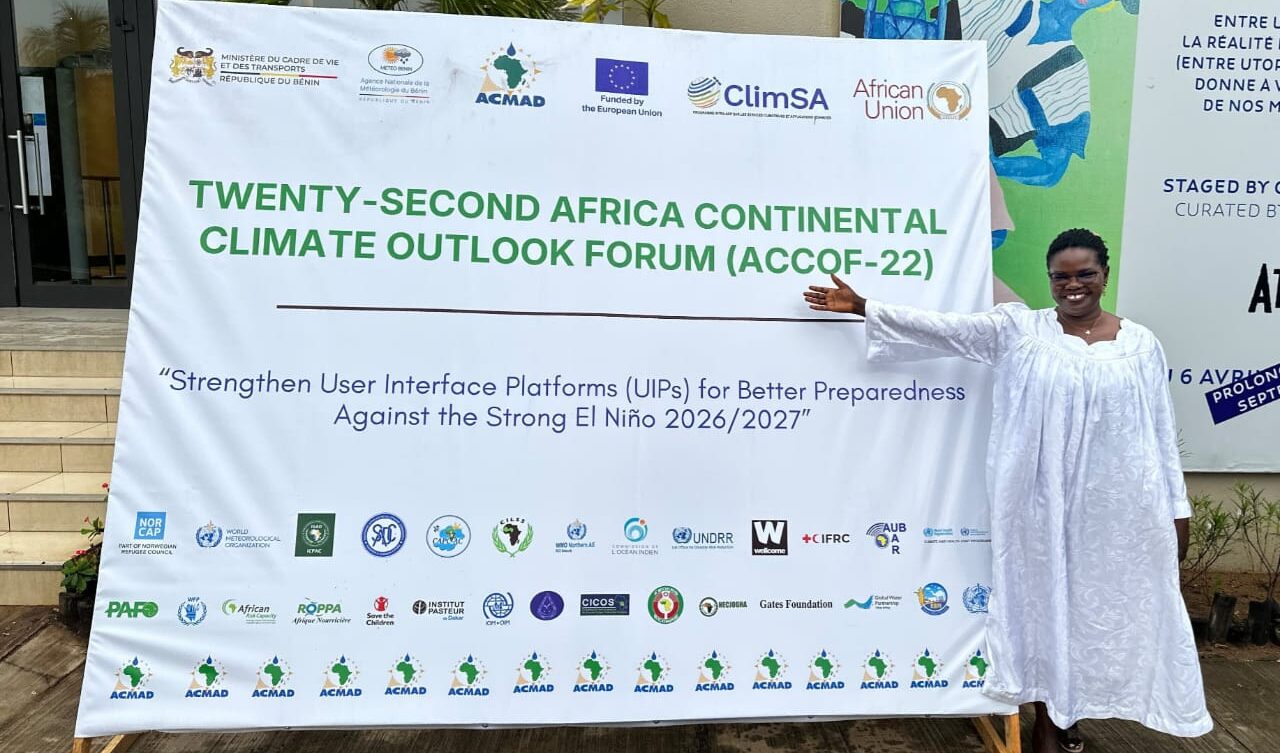
Preparatory work for the 22nd African Continental Climate Outlook Forum (ACCOF-22) opened in Cotonou amid heavy rainfall, underscoring the urgency of the climate challenges facing the continent.
From 8 to 11 September 2026, experts in meteorology, climate, water and health met to prepare for a potentially strong El Niño event expected to peak toward the end of 2026, with impacts possibly extending into the first half of 2027.
The objective is to prevent a repeat of the human and material losses recorded during previous episodes. Climate change is already affecting agriculture, access to drinking water, public health and disaster management. For farmers and livestock keepers, poor weather forecasting can mean the loss of an entire harvest or herd.
During the opening ceremony, Benin’s minister responsible for transport, living environment and sustainable development, Georges Alé, called for a shift from reaction to anticipation, preparedness and early action. He stressed that climate information must be translated into practical decision-making.
Under the coordination of the African Centre of Meteorological Applications for Development (ACMAD), experts are working to harmonise forecasting tools and produce reliable information adapted to local realities.
But scientific advances are useful only if decision-makers act on them. Governments and local authorities need to use alerts to plan water reserves, pre-position emergency and medical resources and organise evacuations before flooding or other disasters occur.
Communication is another critical link. An accurate weather warning is of little value if it remains within institutions or cannot be understood by the public. The African Union of Broadcasting took part in the Cotonou discussions to emphasise the role of radio, television, press, community media and digital platforms in climate resilience.
Journalists and communicators have a responsibility to translate technical information, disseminate alerts widely and guide communities so they can act at the right time.
The action plans and new climate-information formats developed in Cotonou are expected to be validated during the main ACCOF-22 session in October 2026.